

 English
 Arabic
 Chinese (Simplified)
 French
 German
 Japanese
 Korean
 Russian
 Spanish
 Swedish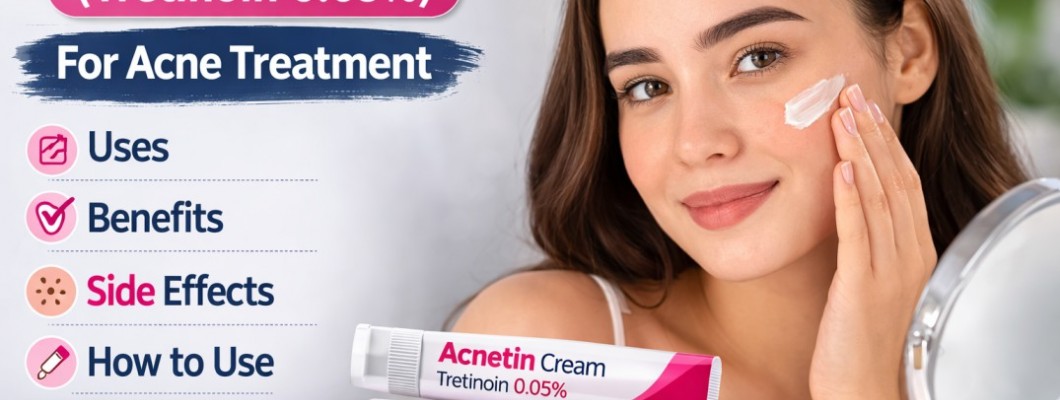
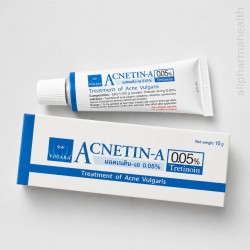
Acnetin Cream (Tretinoin 0.05%) is a topical retinoid used to treat acne vulgaris by unclogging pores, reducing inflammation, and promoting faster skin cell turnover. When applied regularly (usually once daily at night), it helps reduce pimples, blackheads, and whiteheads while also improving overall skin texture. It should be used carefully because it can cause mild irritation, dryness, and increased sun sensitivity, especially during the first few weeks of treatment.
Why Dermatologists Often Recommend Acnetin Cream
Acne is one of the most common skin concerns worldwide. Whether it’s stubborn breakouts, clogged pores, or those tiny bumps that never seem to disappear, treating acne can feel frustrating.
That’s where Acnetin Cream (Tretinoin 0.05%) comes in.
This medication contains tretinoin, a vitamin A derivative that dermatologists frequently prescribe for acne treatment. Instead of simply drying out pimples, it works at a deeper level—helping skin renew itself faster and preventing pores from getting blocked in the first place.
Many skincare treatments only target the surface. Tretinoin works differently. It supports the skin’s natural renewal cycle, which is why it’s often considered a long-term acne solution rather than a quick fix.
If used consistently and correctly, Acnetin Cream can gradually lead to clearer, smoother, and healthier-looking skin.
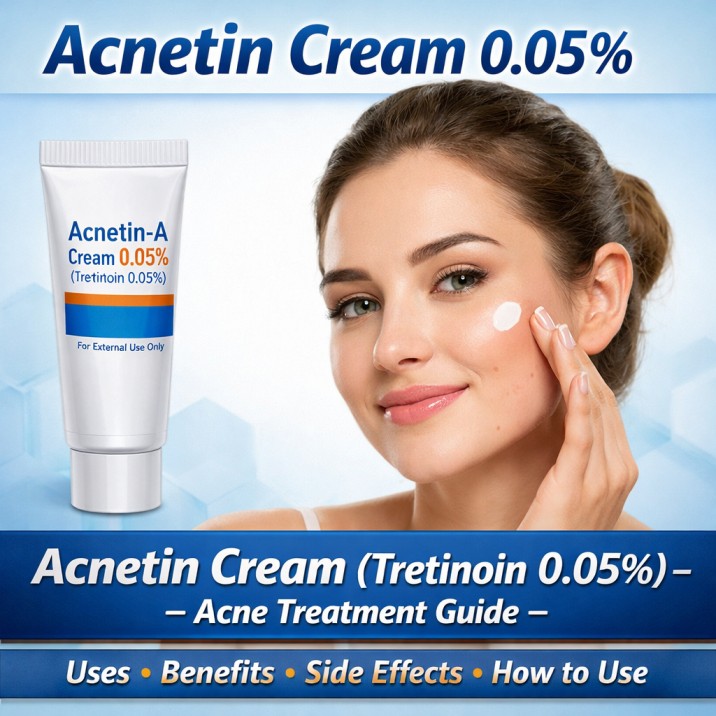
Ingredients in Acnetin Cream
The main active ingredient is:
Tretinoin 0.05%
Tretinoin belongs to a group of medications called retinoids. It works by speeding up the turnover of skin cells and preventing the formation of acne lesions.
Other inactive ingredients in the cream may include:
Emollients that keep the skin moisturized
Stabilizers that maintain the product’s effectiveness
Preservatives to prevent contamination
Cream base that allows easy skin absorption
These supporting ingredients help deliver tretinoin evenly while minimizing irritation.
What Acnetin Cream Is Used For
Acnetin Cream is primarily prescribed for acne vulgaris, but its benefits often go beyond that.
Common uses include:
1. Treating Acne Breakouts
Helps reduce inflammatory pimples and prevents new ones from forming.
2. Clearing Blocked Pores
Breaks down blackheads and whiteheads by keeping pores open.
3. Improving Skin Texture
Regular use can make skin appear smoother and more refined.
4. Fading Post-Acne Marks
By speeding up skin renewal, it can gradually reduce acne marks.
5. Supporting Anti-Aging Skincare
Though not its main purpose here, tretinoin is widely known to improve fine lines and skin tone over time.
How Acnetin Cream Works
The secret behind tretinoin is its ability to accelerate skin cell turnover.
Normally, dead skin cells can accumulate on the surface and clog pores. This leads to acne.
Tretinoin works by:
Increasing the rate of skin renewal
Preventing dead skin buildup inside pores
Reducing inflammation in acne lesions
Stimulating collagen production over time
Because of this mechanism, it may take 4–8 weeks before noticeable improvement appears. Patience is key with retinoid treatments.
Recommended Dosage and How to Use
Using Acnetin Cream correctly makes a big difference in both results and comfort.
Typical application instructions
Wash your face gently with a mild cleanser.
Wait 15–20 minutes until the skin is completely dry.
Apply a pea-sized amount to the affected area.
Use once daily at night, unless your doctor says otherwise.
Helpful tips
Start slowly if you have sensitive skin.
Avoid applying too close to the eyes, nose corners, and lips.
Use moisturizer to reduce dryness.
Overusing the cream will not speed up results and may cause irritation.
Possible Side Effects
Like most retinoids, Acnetin Cream can cause mild side effects, especially during the first weeks.
Common side effects
Skin dryness
Peeling or flaking
Redness
Mild burning or irritation
Increased sensitivity to sunlight
These reactions are often temporary and improve as the skin adjusts.
Less common effects
Severe irritation
Swelling
Blistering or crusting
If severe reactions occur, stopping the medication and consulting a doctor is recommended.
Important Warnings and Precautions
Before starting Acnetin Cream, a few precautions are worth keeping in mind.
Sun protection is essential
Tretinoin makes the skin more sensitive to sunlight. Always use broad-spectrum sunscreen during the day.
Avoid harsh skincare products
Products containing alcohol, exfoliating acids, or strong scrubs may increase irritation.
Pregnancy warning
Tretinoin is generally not recommended during pregnancy. Consult a healthcare professional before use.
Initial acne flare
Some users notice a temporary acne purge during the first few weeks. This is normal and usually settles with continued use.
Who Should Avoid This Cream
Acnetin Cream may not be suitable for everyone.
You should speak with a doctor if you:
Have extremely sensitive skin
Are pregnant or planning pregnancy
Have eczema or severe skin irritation
Are using other strong acne medications
A healthcare professional can help determine if tretinoin is appropriate for your skin.
Storage Instructions
To keep Acnetin Cream effective:
Store below 25°C
Keep away from direct sunlight
Close the cap tightly after use
Keep out of reach of children
Proper storage helps maintain the stability of the medication.
Frequently Asked Questions (FAQs)
1. How long does Acnetin Cream take to work?
Most people start seeing visible improvements within 4 to 8 weeks. However, full benefits may take up to 12 weeks with consistent use.
2. Can Acnetin Cream make acne worse at first?
Yes, an initial purging phase can occur. This happens because tretinoin pushes clogged pores to the surface faster. The flare-up usually improves after a few weeks.
3. Should I use moisturizer with this cream?
Yes. A gentle moisturizer can help reduce dryness and peeling caused by tretinoin.
4. Can Acnetin Cream remove acne scars?
It can help fade mild post-acne marks and improve skin texture, but deeper scars may require additional treatments.
5. Is Acnetin Cream safe for long-term use?
When used under medical guidance, tretinoin can be safe and effective for long-term skincare and acne control.
Final Thoughts
Acnetin Cream (Tretinoin 0.05%) remains one of the most trusted topical treatments for acne vulgaris. By accelerating skin renewal and preventing clogged pores, it tackles acne at its root rather than just masking the symptoms.
Like most retinoids, results require consistency and patience, but the long-term benefits often include clearer skin, smoother texture, and fewer breakouts.
If you're considering adding Acnetin Cream to your skincare routine, using it carefully and following proper sun protection can make a significant difference in achieving healthier skin.
For more trusted health information and medication guides, visit Alipharmahealth for detailed insights into skincare and dermatology treatments.
6 Comment(s)
I appreciate the clarity and warmth in your writing style. I appreciate that you gave concrete examples instead of just broad recommendations. Continue doing fantastic work on this blog.
We are a group of volunteers and opening a new scheme in our community. Your web site provided us with valuable info to work on. You've done a formidable job and our entire community will be grateful to you.
I'm very happy that I found this post. The way you approached this topic was both unique and refreshing, offering a much-needed alternative viewpoint. Finding content that questions conventional wisdom is always fantastic.
I do not even know how I ended up here, but I thought this post was great. I don't know who you are but certainly you are going to a famous blogger if you are not already ;) Cheers!
What a great article! I found myself nodding along as I read it because I totally agree with your main points. Seeing content that is both educational and truly beneficial is refreshing. I am eagerly awaiting your upcoming post!
This is a fantastic article, and I love the way you've presented the information in a clear and concise manner. You've provided some really useful examples to support your arguments, and I like how you've divided difficult ideas into smaller, more digestible chunks. I've gained a lot of knowledge from reading this, and I can't wait to put some of the ideas you covered into practice. I truly appreciate you taking the time to write this. Thank you.
Leave a Comment