

 English
 Arabic
 Chinese (Simplified)
 French
 German
 Japanese
 Korean
 Russian
 Spanish
 Swedish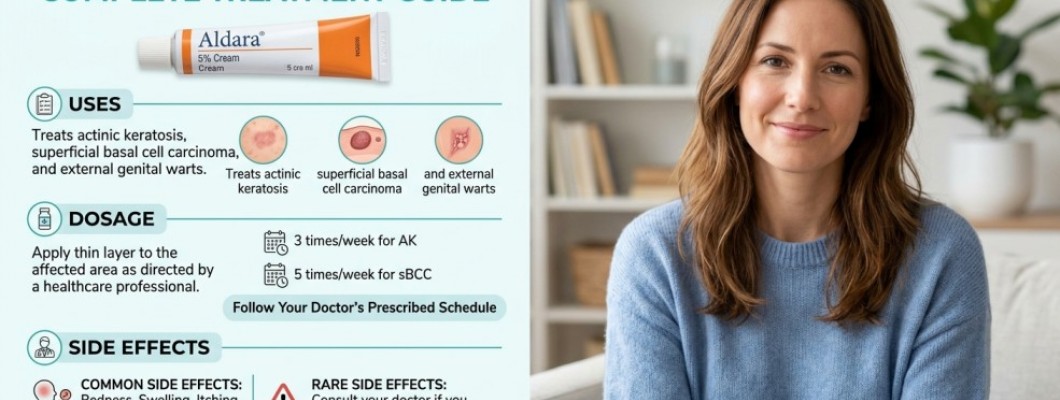
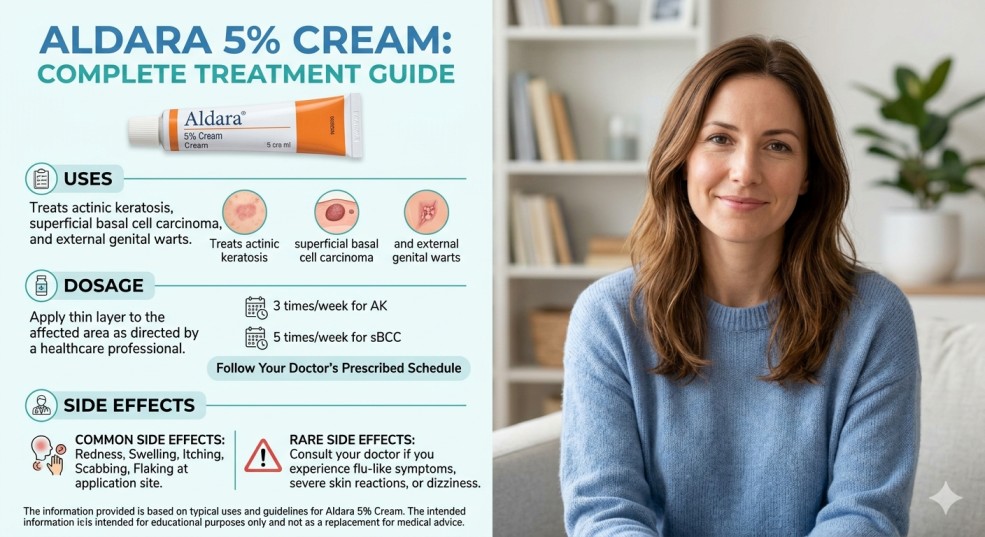
Aldara 5% Cream is a topical prescription medication that contains Imiquimod 5%, an immune response modifier. It is commonly used to treat genital warts, actinic keratosis (sun-damaged skin), and superficial basal cell carcinoma. Instead of directly killing viruses or abnormal cells, it works by stimulating the body’s immune system to fight them naturally.
When used correctly under medical guidance, Aldara can be an effective treatment option for certain skin conditions. However, like most prescription creams, it should be used carefully to avoid irritation or unwanted side effects.
Why People Use Aldara Cream
Skin conditions caused by viruses or sun damage can be stubborn. Sometimes regular creams or treatments simply don’t work.
That’s where Aldara 5% Cream comes in.
Rather than acting like a traditional medicine that directly attacks the problem, Aldara takes a slightly different approach. It activates your immune system, helping your body recognize and remove abnormal skin cells or viral infections.
Because of this unique mechanism, dermatologists often prescribe it for conditions that require long-term immune stimulation rather than quick topical relief.
At Alipharmahealth, patients and readers often search for reliable information about Aldara because it’s widely used yet commonly misunderstood.
Ingredients in Aldara 5% Cream
The primary active ingredient in Aldara cream is:
Active Ingredient
Imiquimod 5%
This compound belongs to a class of medicines called immune response modifiers.
Inactive Ingredients
Depending on the manufacturer, the cream base may include:
Isostearic acid
Cetyl alcohol
Stearyl alcohol
White petrolatum
Polysorbate 60
Sorbitan monostearate
Glycerin
Xanthan gum
Purified water
These ingredients help stabilize the cream and allow it to spread evenly across the skin.
What Is Aldara 5% Cream Used For?
Doctors prescribe Aldara cream for several dermatological conditions.
1. Genital and Perianal Warts
Aldara is widely used to treat external genital warts caused by the human papillomavirus (HPV). It helps the immune system attack infected skin cells.
2. Actinic Keratosis
These are rough, scaly patches caused by sun damage. They can potentially develop into skin cancer if untreated.
Aldara stimulates the immune response to remove damaged cells.
3. Superficial Basal Cell Carcinoma
This is a mild form of skin cancer that affects the top layer of skin. Aldara may be prescribed when surgery isn’t suitable.
4. Certain Off-Label Dermatological Uses
Some dermatologists may use it for:
Molluscum contagiosum
Viral skin lesions
Certain precancerous skin conditions
However, these uses depend on a doctor’s recommendation.
How to Use Aldara Cream (Dosage Guide)
Always follow your doctor’s instructions, but typical usage looks like this:
Standard Application Steps
Wash and dry the affected area.
Apply a thin layer of Aldara cream before bedtime.
Rub gently until the cream disappears.
Leave it on the skin for 6–10 hours.
Wash the area with mild soap and water.
Typical Treatment Schedule
Genital warts
Apply 3 times per week
Continue until warts disappear (up to 16 weeks)
Actinic keratosis
Apply 2 times per week
Treatment usually lasts 16 weeks
Superficial basal cell carcinoma
Apply 5 times per week
Treatment typically continues for 6 weeks
Avoid applying more than prescribed because it won’t speed up healing and may cause irritation.
Possible Side Effects
Like most topical medications, Aldara can cause mild to moderate skin reactions.
Common Side Effects
Redness
Burning sensation
Itching
Dry or flaky skin
Swelling
These reactions often indicate that the immune system is responding to the treatment.
Less Common Effects
Skin peeling
Scabbing
Blistering
Headache
Fatigue
Rare but Serious Reactions
Stop using the cream and consult a doctor if you experience:
Severe skin inflammation
Open sores or ulcers
Flu-like symptoms
Persistent pain or swelling
Important Warnings and Precautions
Before starting treatment, keep these safety tips in mind.
1. Avoid Sensitive Areas
Do not apply inside:
The vagina
Rectum
Nose
Eyes
2. Sun Sensitivity
Aldara can make skin more sensitive to sunlight.
Wear sunscreen and limit sun exposure.
3. Not for Internal Use
This cream is strictly for external use only.
4. Pregnancy & Breastfeeding
Consult a healthcare provider before using Aldara during pregnancy or while breastfeeding.
5. Skin Reactions Are Normal
Mild redness or irritation is expected during treatment. Severe reactions, however, should be reported to a doctor.
Helpful Tips for Better Results
Small adjustments can make treatment smoother.
Apply the cream only to affected areas
Wash hands before and after application
Avoid covering the treated area with tight bandages
Follow the full treatment schedule even if symptoms improve early
Consistency is key for the immune system to properly clear abnormal cells.
Frequently Asked Questions (FAQs)
1. How long does Aldara 5% cream take to work?
Results vary depending on the condition being treated. For genital warts, improvement may appear within 4 to 8 weeks, while actinic keratosis treatment may take up to 16 weeks.
2. Can Aldara permanently remove genital warts?
Aldara can remove visible warts, but it does not cure the HPV virus. New warts may appear later if the virus remains in the body.
3. Should I wash Aldara cream off after applying it?
Yes. Aldara should typically stay on the skin for 6–10 hours, then it should be washed off with mild soap and water.
4. Can I use Aldara every day?
Not usually. Most treatment plans require 2–5 applications per week, depending on the condition. Daily use without medical advice may cause irritation.
5. Is Aldara safe for long-term use?
It is designed for short treatment cycles (usually 6–16 weeks). Long-term use should only occur under medical supervision.
Final Thoughts
Aldara 5% Cream is a unique dermatological treatment that works by boosting the body’s immune response rather than directly attacking viruses or abnormal cells.
Because of this, it has become a widely prescribed option for conditions like genital warts, actinic keratosis, and superficial basal cell carcinoma.
However, proper usage matters. Following dosage instructions, monitoring skin reactions, and consulting a healthcare professional when needed can make treatment both safe and effective.
For more trusted medication guides and health information, Alipharmahealth continues to provide clear, patient-focused resources to help readers make informed healthcare decisions.
6 Comment(s)
It's obvious that you are knowledgeable about the subject. This was a great read from start to finish. I continue to visit your blog because of the high-quality content you provide.
Hi Dear, are you in fact visiting this site on a regular basis, if so after that you will definitely obtain fastidious experience.
I can attest that everything you've mentioned here is consistent with what I observe on a daily basis because I work in this field. It's encouraging to see this subject treated with such precision and subtlety. This is something that more people should be discussing.
This is an excellent resource, and I like how you've organized the data into an understandable and straightforward format. I appreciate how you've included links and resources for additional reading, and the examples you've used to support your arguments are really beneficial. Keep up the great work, I'm looking forward to reading more. Well done, and we appreciate you sharing your expertise with us.
Whoa, I had no idea that one blog post could teach me so much! You've given me a lot to consider, and I already intend to put some of your recommendations into practice. I'm excited to read more from you in the future.
It's uncommon to find a writing style that is both captivating and overpowering. This article taught me a few new things that I had not previously thought of. I especially liked the part where you explained the common mistakes people make. In the future, I hope to read more of your writing.
Leave a Comment