

 English
 Arabic
 Chinese (Simplified)
 French
 German
 Japanese
 Korean
 Russian
 Spanish
 Swedish
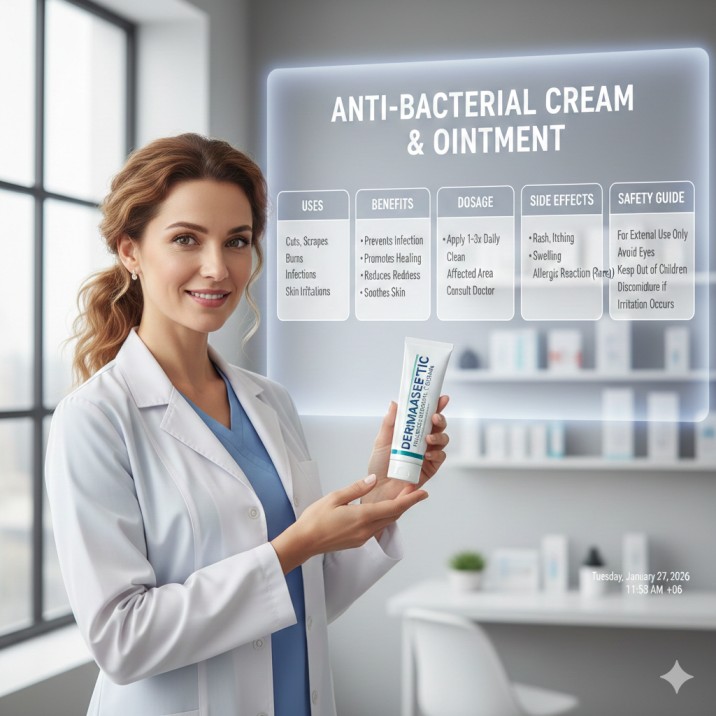
Anti-Bacterial Cream / Ointment is a topical medicine used to treat and prevent bacterial skin infections. It helps stop bacteria from growing, reduces redness and swelling, and supports faster healing of cuts, wounds, burns, and minor skin injuries. When used correctly, it keeps infections under control and protects damaged skin from getting worse.
Why This Cream Is a Must-Have in Every First-Aid Kit
Let’s be honest—small cuts, scratches, insect bites, or accidental burns happen all the time. Most of the time we ignore them, and that’s exactly when bacteria step in. That’s where an Anti-Bacterial Cream or Ointment quietly does its job.
It creates a protective layer over the skin while actively fighting infection-causing bacteria. Simple. Effective. No drama.
At Alipharmahealth, this type of cream is often recommended as a basic skin-care essential because early treatment can save you from bigger skin problems later.
What’s Inside: Key Ingredients Explained
The exact formulation may vary by brand, but most anti-bacterial creams contain one or more of the following active ingredients:
Neomycin / Bacitracin / Polymyxin B – Broad-spectrum antibiotics that stop bacteria from multiplying
Fusidic Acid or Mupirocin – Targets common skin bacteria like Staphylococcus aureus
Petroleum or Soft Paraffin Base – Keeps the skin moist and supports healing
Zinc Oxide (in some formulas) – Soothes irritation and protects damaged skin
These ingredients work together to treat infection while helping the skin repair itself naturally.
What Is Anti-Bacterial Cream or Ointment Used For?
This cream isn’t just for one problem—it’s surprisingly versatile. Doctors commonly recommend it for:
Minor cuts, scrapes, and wounds
Infected burns (first-degree or minor second-degree)
Bacterial skin infections like impetigo
Infected eczema or dermatitis (when advised by a doctor)
Post-surgical wound care (minor procedures)
Insect bites that show signs of infection
If the skin looks red, swollen, painful, or starts oozing—bacteria may be involved.
How to Use It the Right Way (Dosage & Application)
Using it properly matters more than people think.
General usage guidelines:
Clean the affected area gently with water and mild soap
Pat dry—don’t rub
Apply a thin layer of the cream or ointment
Use 2–3 times daily, or as directed by a healthcare professional
Cover with a sterile bandage if needed
Do not overapply. More is not better when it comes to antibiotics.
Cream vs Ointment: Is There a Difference?
Yes—and it’s worth knowing.
Creams are lighter, absorb faster, and feel less greasy
Ointments are thicker, stay longer on the skin, and are better for dry or open wounds
If the skin is very dry or cracked, an ointment often works better. For moist or weeping areas, a cream may feel more comfortable.
Possible Side Effects You Should Know
Most people use anti-bacterial creams without any issues. Still, side effects can happen, especially with prolonged use.
Common but mild effects include:
Temporary itching or burning
Redness at the application site
Rare but serious reactions:
Skin rash or swelling
Allergic reactions
Increased irritation instead of improvement
If symptoms worsen or don’t improve within 5–7 days, it’s time to stop and consult a doctor.
Important Warnings & Safety Tips
A few things to keep in mind for safe use:
For external use only
Avoid contact with eyes, mouth, or inside the nose (unless prescribed)
Do not use on large or deep wounds without medical advice
Long-term or unnecessary use may lead to antibiotic resistance
Inform your doctor if you are pregnant or breastfeeding
Used wisely, this cream is safe. Misused, it loses its effectiveness.
When You Should See a Doctor
Topical treatment works well for mild infections. But seek medical advice if:
The infection spreads quickly
You develop fever or severe pain
There’s pus or foul-smelling discharge
No improvement after one week
Skin infections can escalate fast if ignored.
Frequently Asked Questions (FAQs)
1. Can anti-bacterial cream heal wounds faster?
Yes. By preventing bacterial growth, it allows the skin to heal naturally without interference.
2. Is it safe for children?
Most formulations are safe for children, but dosage and duration should always be confirmed with a doctor.
3. Can I use it daily?
Short-term daily use is fine. Long-term daily use is not recommended unless advised by a healthcare professional.
4. Does it work on fungal infections?
No. Anti-bacterial creams do not treat fungal or viral infections. Using the wrong treatment can delay healing.
5. Should I stop once the skin looks better?
Complete the recommended course unless instructed otherwise, even if symptoms improve early.
Final Takeaway
An Anti-Bacterial Cream or Ointment is one of those quiet essentials you don’t think about—until you really need it. From everyday cuts to minor infections, it plays a key role in protecting your skin and speeding up recovery.
Used correctly, it’s safe, effective, and incredibly practical. At Alipharmahealth, it’s often highlighted as a first-line solution for simple skin infections—because early care makes all the difference.
4 Comment(s)
I appreciate you taking the time to write such a thorough and beneficial post. I particularly appreciated how you applied real-world examples to make the ideas much more approachable. You obviously gave this a lot of thought, and it is evident. I appreciate how thoughtful and well-researched your writing always is.
I appreciate you taking the time to write such an in-depth piece. Excellent job! Today, I picked up a few new skills that I can use right away in my own projects. I'm eager for more content similar to this one!
I appreciate the effort you put into this. You obviously put a lot of effort into organizing and researching your ideas. Everything was made much more cohesive by the examples.
To be honest, I haven't seen a better summary of this subject in a long time. Without making the post seem overly lengthy or overwhelming, you were able to include all the important information. Outstanding work!
Leave a Comment