

 English
 Arabic
 Chinese (Simplified)
 French
 German
 Japanese
 Korean
 Russian
 Spanish
 Swedish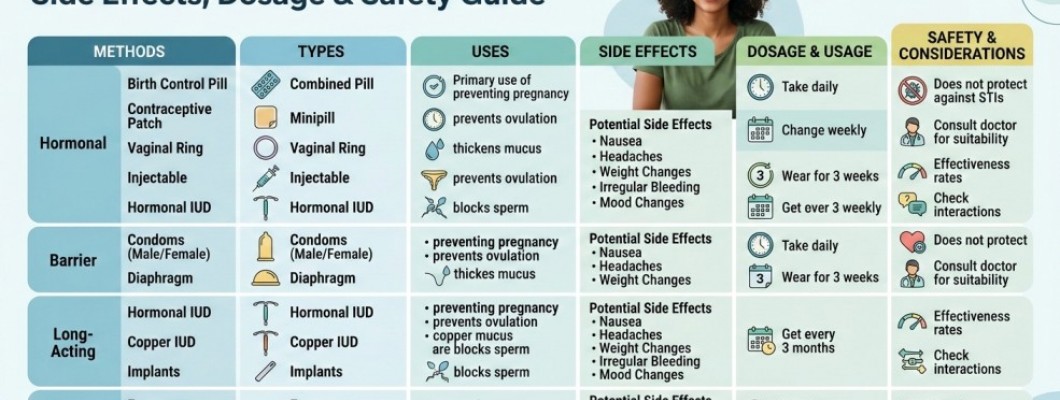
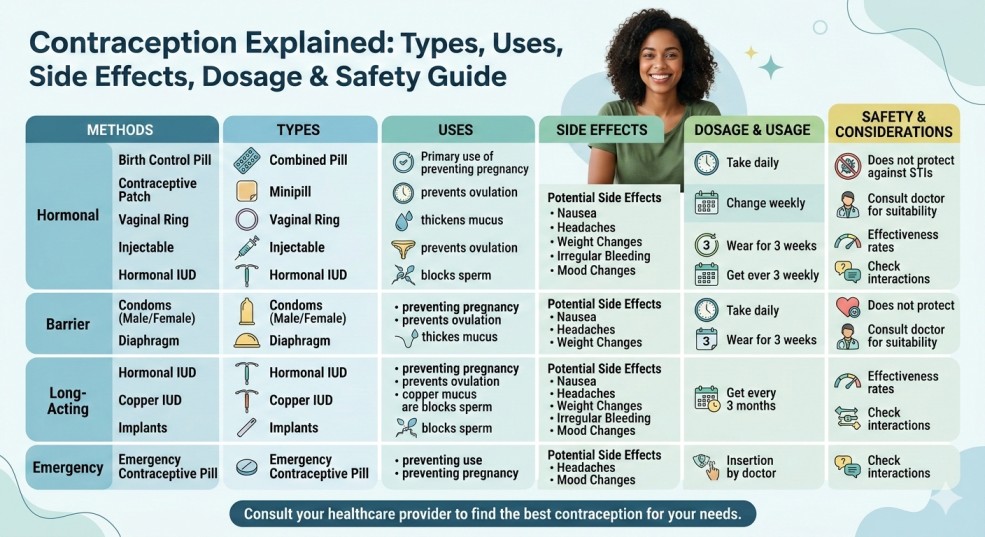
Contraception is a method used to prevent pregnancy. It works by stopping ovulation, blocking sperm from reaching the egg, or preventing implantation. There are different types available—pills, injections, implants, condoms, IUDs, and more—so you can choose what fits your body and lifestyle best.
Why Contraception Matters More Than You Think
Let’s be honest—family planning isn’t just about avoiding pregnancy. It’s about control, timing, health, and peace of mind. Whether you're focusing on your career, managing a medical condition, or simply not ready for a baby, contraception gives you options.
And options are powerful.
At Alipharmahealth, we believe access to accurate, easy-to-understand information helps you make confident decisions about your reproductive health. So let’s break it all down in a simple, no-confusion way.
What’s Inside? (Ingredients & Types)
The ingredients depend on the type of contraception. Here are the most common hormonal components:
1. Hormonal Contraceptives
Usually contain:
Ethinyl Estradiol (a synthetic estrogen)
Progestins (like Levonorgestrel, Desogestrel, Drospirenone, etc.)
These hormones prevent ovulation and thicken cervical mucus to block sperm.
2. Progestin-Only Options
Contain:
A single progestin hormone (no estrogen)
Often recommended for breastfeeding mothers or women sensitive to estrogen.
3. Non-Hormonal Methods
Copper (in copper IUDs)
Latex or polyurethane (in condoms)
No active hormones involved
Each type works differently, so the “ingredient list” varies depending on your chosen method.
What Is Contraception Used For?
Of course, the main goal is pregnancy prevention. But that’s not all.
Many hormonal contraceptives are also used to:
Regulate irregular periods
Reduce heavy menstrual bleeding
Ease painful cramps
Manage acne
Treat hormonal imbalances
Help with PCOS symptoms
Reduce risk of certain ovarian cysts
So yes, contraception often does more than just prevent pregnancy.
How to Use It (Dosage & Directions)
The dosage depends entirely on the method:
Birth Control Pills
Usually 1 tablet daily at the same time.
21-day packs (7-day break) or 28-day packs (continuous).
Injections
Given every 3 months by a healthcare provider.
Implants
Inserted under the skin.
Effective for 3–5 years.
IUDs
Placed inside the uterus.
Can last 3–10 years depending on type.
Condoms
Used during each sexual encounter.
Consistency is key. Missing doses (especially pills) reduces effectiveness. If you’re unsure, a pharmacist at Alipharmahealth can guide you on correct usage.
Possible Side Effects
Like any medication, contraception can cause side effects. Most are mild and settle within a few months.
Common ones include:
Nausea
Breast tenderness
Mild headaches
Mood changes
Spotting between periods
Slight weight fluctuation
Less common but serious symptoms (seek medical help immediately):
Severe chest pain
Sudden shortness of breath
Intense headaches
Vision changes
Swelling in legs
These could signal rare complications like blood clots, especially in smokers over 35.
Important Warnings & Precautions
Before starting contraception, talk to a healthcare professional if you:
Smoke and are over 35
Have high blood pressure
Have a history of blood clots
Have liver disease
Are breastfeeding
Have migraines with aura
Hormonal contraception isn’t for everyone. That’s okay. There are plenty of alternatives available.
Also, remember:
Most contraceptives do NOT protect against STIs. Only condoms offer protection against sexually transmitted infections.
Effectiveness – How Reliable Is It?
When used correctly:
Pills: Over 99% effective (perfect use)
IUDs & Implants: Over 99% effective
Injections: About 94–99%
Condoms: Around 85–98%
Perfect use matters. Real-life use lowers effectiveness slightly.
Frequently Asked Questions (FAQs)
1. How fast does contraception start working?
It depends on when you start. If you begin within the first 5 days of your period, protection is usually immediate. Otherwise, use backup protection for 7 days.
2. Can contraception affect fertility long-term?
No. In most cases, fertility returns quickly after stopping. Some methods like injections may take a few months longer.
3. Is weight gain guaranteed?
Not at all. Some women notice slight changes, but many experience no weight difference.
4. Can I take contraception to skip my period?
Yes, certain pill regimens allow continuous use to delay or skip periods. Always consult a professional first.
5. What happens if I miss a pill?
Take it as soon as you remember. If more than one pill is missed, follow the package instructions and use backup contraception for 7 days.
Final Thoughts
Contraception isn’t one-size-fits-all. It’s personal. What works perfectly for one person might not suit another—and that’s completely normal.
The key is choosing a method that fits your health profile, comfort level, and lifestyle. When used correctly, contraception is safe, reliable, and empowering.
If you’re unsure where to start, the experts at Alipharmahealth can help guide you toward the best option for your needs.
4 Comment(s)
I really liked the direction you took with this topic. For novices like me, the detailed instructions you offered are just what we need. Please don't stop producing such content.
For me, the timing of this post was ideal. I've been attempting to make sense of this subject, and your explanation at last made everything clear. I value how well-considered and thoroughly researched your writing consistently is.
This article was useful and thought-provoking, in my opinion. It caused me to reevaluate some of my presumptions. I am grateful that you took the time to write it.
This was one of those posts that, after reading it, caused you to pause and reflect for a bit. It was simpler to take into account various points of view because you presented the subject in a composed and fair manner. I value the work you do to produce such intelligent content.
Leave a Comment