

 English
 Arabic
 Chinese (Simplified)
 French
 German
 Japanese
 Korean
 Russian
 Spanish
 Swedish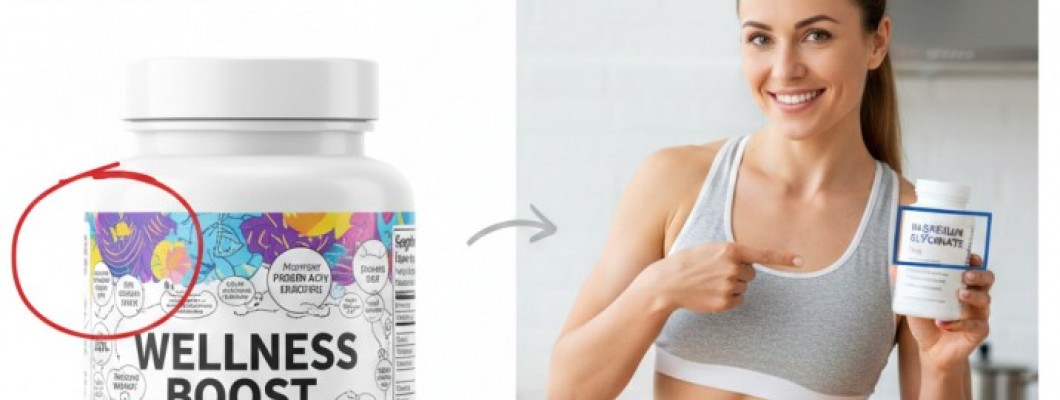
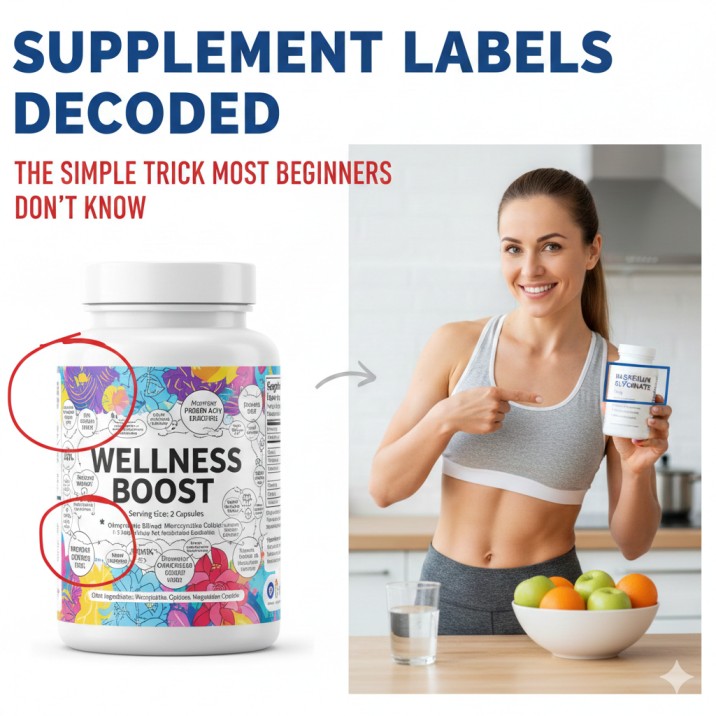
Reading supplement labels isn't about memorizing science terms. It's about knowing where to look and what to ignore.
Once you understand the Supplement Facts panel, ingredient list, and a few marketing tricks, choosing supplements becomes much easier — and safer.
Now let's slow it down and make sense of everything you see on that bottle.
Why Most People Feel Lost Reading Supplement Labels
If you've ever flipped a supplement bottle around and thought, "What am I even looking at?" — you're not alone.
Labels are packed with:
Tiny text
Long chemical names
Numbers that don't mean much at first glance
And on top of that, the front of the bottle is usually shouting bold promises that sound impressive but explain very little.
The good news?
You don't need a medical background to understand supplement labels. You need a system.
Start With the Supplement Facts Panel (Not the Front)
Here's a small but important mindset shift.
The front label is marketing.
The Supplement Facts panel provides information.
Always flip the bottle over.
This panel tells you:
What's actually inside
How much of each ingredient are you getting
How the serving size is defined
Everything else is secondary.
Serving Size: The Most Ignored Line
This is where many beginners slip up.
The serving size tells you:
How many capsules, tablets, or scoops equal one dose
Whether the numbers listed apply to one pill or multiple
If the serving size is 2 capsules but you're taking only 1, you're getting half the listed amount.
Simple detail. Big difference.
Understanding Daily Value (DV) Without Overthinking
Next to many nutrients, you'll see a percentage labeled "Daily Value."
Here's the beginner-friendly way to read it:
100% DV = the general daily recommended amount
Less than 100% = partial support
Way over 100% = higher-dose supplement
Higher isn't always better.
Lower isn't always useless.
Context matters.
Active Ingredients vs Everything Else
Most supplement labels separate ingredients into two groups.
Active Ingredients
These are the nutrients or compounds the supplement is meant to provide.
Examples include:
Minerals
Herbal extracts
Amino acids
This is where you focus first.
Other Ingredients
These support the product's form, not its function.
They may include:
Capsules
Fillers
Binding agents
Seeing these doesn't automatically mean the supplement is bad. It just means it needs to hold together and stay shelf-stable.
Ingredient Order Tells a Story
Ingredients are listed by weight, from highest to lowest.
If a trendy ingredient is listed near the bottom, it's probably included in a very small amount.
That doesn't make it harmful — just less impactful.
This is one of the easiest ways to spot products that rely more on buzzwords than substance.
Standardized Extracts: A Label Detail Worth Noticing
When it comes to herbal supplements, you may see phrases like:
"Standardized to X%"
"Extract ratio"
This usually means the manufacturer aimed for consistency between batches.
For beginners, this detail can signal better quality control — though it's not the only factor that matters.
Warnings and Usage Notes Matter More Than People Think
This part is often skipped.
The warning section may mention:
Who should avoid the supplement
When not to take it
Interactions with medications
These lines aren't there to scare you. They're there because supplements affect the body — even natural ones.
Reading this section takes 30 seconds and can prevent mistakes.
Marketing Claims vs Reality
Words like:
"Doctor recommended"
"All natural”
Sounds reassuring, but they're often loosely regulated.
Instead of trusting claims, look for:
Clear ingredient amounts
Transparent labeling
Simple formulations
Labels that explain less usually hide more.
Certifications: Helpful, Not Mandatory
You might see seals like:
GMP
Third-party tested
Quality certified
These don't guarantee effectiveness, but they can show that a product follows certain manufacturing standards.
Think of certifications as bonus points — not the main decision factor.
How Beginners Can Avoid Overbuying Supplements
Here's a practical opinion.
Most people don't need:
Complex stacks
10-ingredient blends
Mega-dose formulas
A simple supplement with clearly listed ingredients is often easier to understand and use consistently.
Complicated labels usually benefit sellers more than users.
Online Shopping Makes Label Reading Even More Important
When buying supplements online, you can't inspect the bottle in person.
That's why:
Clear product descriptions
Visible Supplement Facts images
Transparent ingredient lists
Matter more than flashy graphics.
Reliable platforms (including professional health retailers like Alipharmahealth, when applicable) usually display full label details upfront — which is a good sign.
How Long Should You Re-Check Labels?
Here's something people forget.
Re-read labels:
When brands change formulas
When dosage instructions update
When your needs change
A supplement that made sense last year may no longer fit your routine.
Final Thoughts
Learning how to read supplement labels is one of those small skills that pays off again and again.
You don't need perfection.
You don't need expert knowledge.
Just:
Read the Supplement Facts
Check serving size
Scan ingredients honestly
Ignore hype
Once you do that, supplement shopping feels less confusing and much more intentional.
FAQs (Beginner Questions Answered)
Are supplement labels required to be accurate?
Manufacturers must follow labeling regulations, but quality can vary. Reading carefully helps.
Should I avoid supplements with long ingredient lists?
Not always, but simpler formulas are usually easier to understand and manage.
What does "proprietary blend" mean?
It means ingredients are grouped without exact amounts listed, which reduces transparency.
Is a higher dosage always better on labels?
No. More isn't necessarily more effective, and it may not suit everyone.
Can I trust online supplement labels?
Yes, if the seller shows full Supplement Facts panels and clear ingredient details.
8 Comment(s)
I've been reading this blog for a while, and I must admit that this is one of the most perceptive posts I've ever seen. I've learned a lot from reading this, and I'm excited to apply some of the principles you've discussed to my own life. Your enthusiasm for the subject matter is evident, as is your commitment to assisting others in their learning and development. I'm eager to read more, so keep up the good work.
This article was surprisingly relatable and very helpful to me. Thanks for taking the time to put this together. It's clear that a lot of effort went into researching and organizing the information in a way that readers can actually benefit from.
I truly like how you simplified this difficult topic into something so simple to comprehend. I'm going to save this page to my bookmarks so I can refer to it whenever I need to review. Continue your fantastic work!
To be honest, I haven't seen a better summary of this subject in a long time. Definitely one of those posts I'll be thinking about for days. Outstanding work!
It's obvious that you are an expert in your field. I adore how you used relatable anecdotes and actual data to support your claims. I consistently return to your blog because of the high caliber of the content.
References:
Osko payid deposit pokies Osko casino bonus
References:
Wire transfer casino withdrawal australia http://bbs.wj10001.com/home.php?mod=space&uid=3245078
References:
Live casino Osko roadwiki.site
Leave a Comment