

 English
 Arabic
 Chinese (Simplified)
 French
 German
 Japanese
 Korean
 Russian
 Spanish
 Swedish
Yes, hair colour for pregnant woman can be used safely—if you choose the right type, timing, and ingredients. Most experts agree that ammonia-free, herbal, or semi-permanent hair colours, especially after the first trimester, are considered lower risk when used correctly. The key is avoiding harsh chemicals, limiting scalp exposure, and picking pregnancy-friendly options.
Now here’s the part most blogs skip…
Not all “natural” hair colours are actually safe, and some common salon practices can still expose you to chemicals you don’t want near your body right now. Let’s break it down properly—no fear tactics, no fluff.
Why So Many Pregnant Women Worry About Hair Colour (And It Makes Sense)
Pregnancy changes everything. Your body, hormones, skin sensitivity—everything is heightened. So when it comes to colouring your hair, the concern isn’t vanity. It’s safety.
The real worry comes from chemical absorption through the scalp, especially ingredients like ammonia, PPD, and peroxide. While research hasn’t proven hair dye causes harm when used properly, most doctors suggest playing it safe rather than sorry.
And honestly? That’s a smart move.
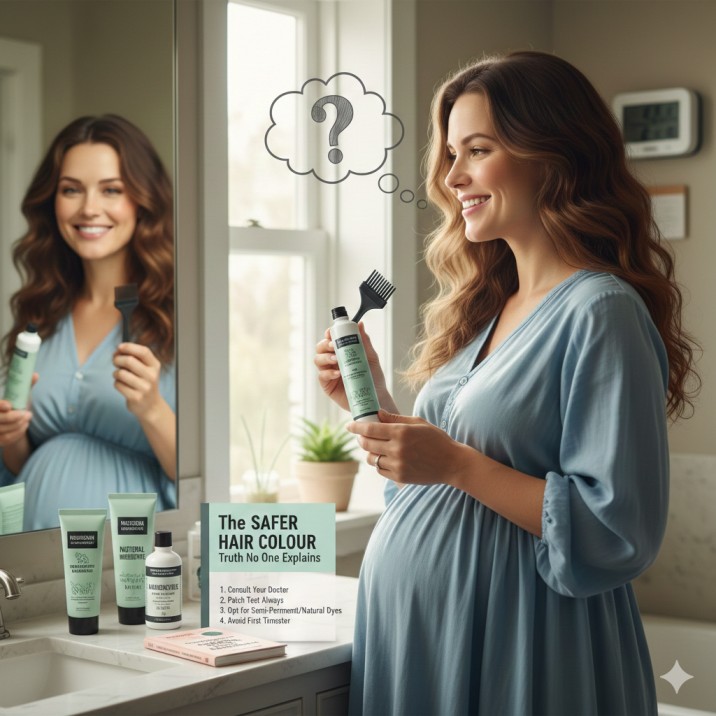
When Is the Safest Time to Color Hair During Pregnancy?
Timing matters more than people realize.
First Trimester: Better to Wait
This is when your baby’s organs are forming. Even though evidence of harm is limited, most professionals suggest avoiding hair colour during the first 12 weeks.
Second & Third Trimester: Safer Window
This is usually considered the best time to color hair—especially if you:
Use ammonia-free hair colour
Limit contact with your scalp
Color hair in a well-ventilated area
Best Hair Colour Options for Pregnant Women (Ranked Safest First)
1. Herbal & Plant-Based Hair Colour
These are often the lowest-risk options.
Henna (pure, chemical-free)
Indigo
Herbal blends without metallic salts
???? Always read the label. “Herbal” doesn’t always mean chemical-free.
2. Ammonia-Free Hair Colour for Pregnant Woman
This is a low-competitive transactional keyword worth noting because many women actively search to buy these.
Benefits:
Less odor
Reduced scalp irritation
Lower chemical fumes
Still, avoid prolonged scalp contact.
3. Semi-Permanent Hair Colour
These don’t penetrate the hair shaft deeply.
Fade naturally
Less chemical processing
Generally gentler on hair
Great choice if you just want a refresh, not a dramatic change.
Hair Coloring Techniques That Reduce Risk
Sometimes it’s not the product—it’s how you use it.
Go for Highlights or Balayage
These techniques don’t touch the scalp, which reduces absorption significantly.
Avoid Root Touch-Ups on the Scalp
If you must color, apply slightly away from the roots.
Shorter Processing Time
Leaving dye on longer doesn’t make it safer—it increases exposure.
Ingredients Pregnant Women Should Avoid in Hair Colour
Read labels like your baby depends on it (because… yeah).
Avoid:
Ammonia
PPD (Paraphenylenediamine)
Resorcinol
High-volume peroxide
Strong synthetic fragrances
If a product smells overpowering, that’s usually your sign to step away.
Does Hair Colour Affect Hormones or Breastfeeding Later?
Good question—and often ignored.
Current evidence suggests topical hair colour doesn’t significantly affect hormones or breast milk when used safely. However, minimizing chemical exposure during pregnancy can help reduce overall body stress.
That’s why many women switch to gentler products during this phase and stick with them even postpartum.
Salon vs At-Home Hair Colour: Which Is Better?
Honestly? At-home can be safer if you control the product and environment.
At home:
You choose ingredients
You control ventilation
No surprise chemical mixes
In salons:
Ask what brand they use
Request ammonia-free formulas
Don’t hesitate to speak up
A professional stylist who respects pregnancy precautions is a green flag.
Patch Test Is Non-Negotiable During Pregnancy
Your skin sensitivity can change overnight.
Always:
Do a patch test 48 hours before use
Watch for itching, redness, burning
Skip entirely if your scalp feels irritated
No color is worth discomfort—or stress.
Do Doctors Actually Approve Hair Colour During Pregnancy?
Most OB-GYNs say the same thing:
“Occasional use of safer hair colour products is unlikely to cause harm.”
That’s not a green light to ignore labels—but it is reassurance that moderation matters.
If you have:
High-risk pregnancy
Skin conditions
Chemical sensitivities
Always check with your doctor first.
Should You Mention Medical or Pharmacy Advice?
In some cases, yes. Trusted health platforms like alipharmahealth sometimes share ingredient-based safety guidance. But unless you’re dealing with allergies or prescription concerns, everyday hair colouring decisions don’t always require medical sourcing.
Simple, informed choices go a long way.
Final Thoughts: You Don’t Have to Choose Between Safety & Feeling Good
Pregnancy already comes with enough changes. Wanting to look like yourself is valid.
The bottom line?
Choose ammonia-free or herbal hair colour
Wait until after the first trimester
Avoid harsh chemicals
Keep it simple
You’re not being careless—you’re being conscious.
FAQs – Real Questions Pregnant Women Actually Ask
Q1. Can I use hair colour in early pregnancy?
It’s better to wait until after the first trimester when possible, especially for permanent dyes.
Q2. Which hair colour is safest for pregnant woman?
Herbal, ammonia-free, and semi-permanent hair colours are considered safer options.
Q3. Is ammonia-free hair colour completely safe?
Safer, yes. Completely risk-free? Nothing is. Always use in moderation and ventilated spaces.
Q4. Can hair dye harm my unborn baby?
There’s no strong evidence showing harm when safer products are used properly and occasionally.
Q5. Should I stop coloring my hair entirely during pregnancy?
Not necessary. Just be selective, informed, and cautious.
Q6. Are organic hair colours always safe?
Not always. Some still contain metallic salts or hidden chemicals—labels matter.
4 Comment(s)
This post is really enlightening. Thank you for sharing so much detailed information. It has given me a lot to consider, and I'm excited to put some of these concepts into practice.
Whoa, what a great breakdown. This post flows flawlessly from one point to the next, so I really appreciate the effort you put into organizing it. We appreciate you taking the time to inform the community about this.
I've been looking for excellent content on this subject for a while, so I'm so happy I found this blog. I adore how you've used examples and visual aids to support your points, and your writing style is interesting and approachable. I'm eager to begin putting your very useful and doable suggestions and counsel into practice in my own life. We truly appreciate you sharing your knowledge with us. Thank you.
Excellent from beginning to end! I was captivated by your writing style the entire time. If you haven't already, I think you should turn this into a full series.
Leave a Comment