



 English
 Arabic
 Chinese (Simplified)
 French
 German
 Japanese
 Korean
 Russian
 Spanish
 Swedish
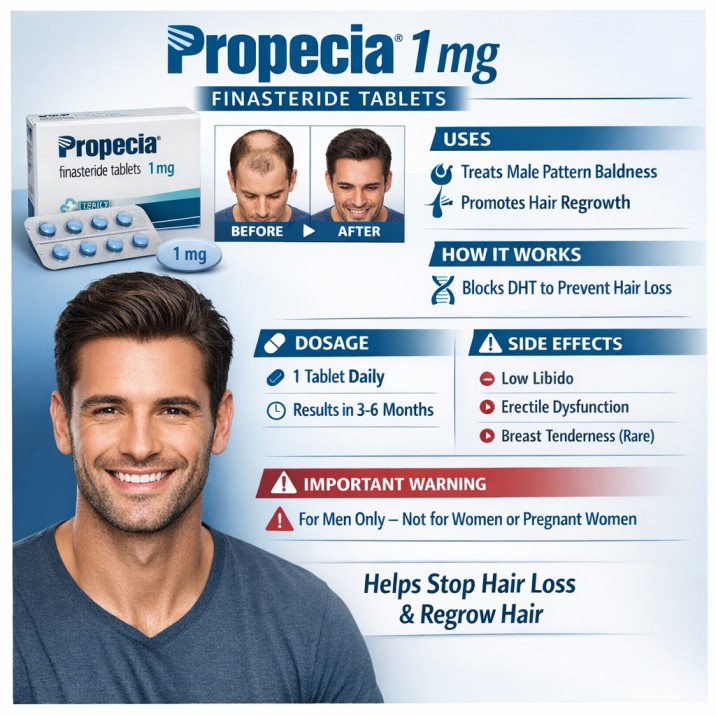
Propecia 1 mg Finasteride tablets are commonly used to treat male pattern hair loss (androgenetic alopecia) in men. The medication works by lowering the hormone responsible for shrinking hair follicles, helping slow hair loss and in many cases encouraging regrowth. A typical dose is one tablet daily, but it should always be taken under medical supervision.
Why Many Men Turn to Propecia for Hair Loss
Hair loss can be frustrating. For many men, it starts slowly—maybe a receding hairline or thinning at the crown. Over time, it becomes more noticeable.
This is where Propecia (Finasteride 1 mg) often enters the conversation.
The medication targets the root cause of male pattern baldness, not just the symptoms. Instead of simply covering up hair loss, it works inside the body to reduce the hormone that weakens hair follicles.
Because of this targeted approach, Propecia has become one of the most widely prescribed treatments for male hair loss worldwide.
Healthcare providers and pharmacies such as Alipharmahealth often include it as part of long-term hair restoration plans when prescribed by a doctor.
What’s Inside Propecia 1 mg Finasteride Tablets?
Active Ingredient
Finasteride belongs to a class of medications known as 5-alpha reductase inhibitors.
In simple terms, it blocks an enzyme that converts testosterone into DHT (dihydrotestosterone). High levels of DHT are responsible for shrinking hair follicles in men with genetic hair loss.
By lowering DHT levels in the scalp, Finasteride helps:
Slow down hair thinning
Protect existing hair follicles
Encourage new hair growth in some individuals
What Is Propecia 1 mg Used For?
Doctors primarily prescribe Propecia 1 mg Finasteride tablets to manage hair loss in adult men.
Common uses include:
1. Male Pattern Baldness
The most common use. It helps slow hair loss at the crown and middle of the scalp.
2. Preventing Further Hair Thinning
Even when regrowth is minimal, the medication often helps maintain existing hair.
3. Hair Regrowth Support
Some men notice thicker or fuller hair after several months of consistent use.
4. Long-Term Hair Loss Management
It is frequently used as part of a long-term strategy to maintain scalp hair density.
Important: This medication is not intended for women or children, especially during pregnancy.
Recommended Dosage and How to Take It
Taking the medication correctly improves your chances of seeing results.
Typical dosage
1 tablet (1 mg) once daily
Helpful tips
Take it at the same time each day
Can be taken with or without food
Swallow the tablet whole with water
Do not crush or break the tablet
When will results appear?
Hair growth takes time. Most users notice changes within:
3 to 6 months for reduced hair shedding
6 to 12 months for visible improvements
Stopping treatment may cause hair loss to resume within several months.
Possible Side Effects
Most people tolerate Finasteride well, but like any medication, it may cause side effects.
Common side effects
Decreased libido
Erectile dysfunction
Reduced semen volume
Mild dizziness
Less common reactions
Breast tenderness
Mood changes
Skin rash
If side effects persist or become bothersome, consult your healthcare provider immediately.
Important Safety Warnings
Before starting Propecia, it’s important to understand a few safety considerations.
Pregnancy warning
Women who are pregnant or may become pregnant should not handle crushed or broken tablets, as Finasteride may harm a developing male fetus.
Medical conditions
Speak with your doctor if you have:
Liver disease
Prostate problems
Hormonal disorders
Regular monitoring
Doctors may recommend occasional check-ups, especially for long-term use.
Who Should Avoid Propecia?
Propecia may not be suitable for everyone.
Avoid using this medication if:
You are female or under 18 years old
You are allergic to Finasteride
You have certain liver conditions
Always consult a healthcare professional before starting treatment.
Tips for Getting the Best Results
Consistency is key when using hair loss treatments.
Here are a few practical tips:
Take the medication daily without skipping doses
Be patient—hair growth cycles take time
Maintain a healthy diet and scalp care routine
Follow your doctor’s guidance carefully
Hair restoration works best when treatments are used consistently over time.
Frequently Asked Questions (FAQs)
1. How long does Propecia take to start working?
Most users begin noticing reduced hair shedding after 3 to 4 months, while visible hair growth may take 6 to 12 months.
2. Can Propecia regrow a completely bald area?
The medication works best on thinning hair rather than completely bald areas. Early treatment usually produces better results.
3. What happens if I stop taking Finasteride?
If treatment stops, the benefits typically reverse within 6 to 12 months, and hair loss may resume.
4. Is Propecia safe for long-term use?
Many men safely use Finasteride for several years under medical supervision. Regular checkups with a doctor are recommended.
5. Can Propecia be taken with other hair loss treatments?
Yes. Doctors sometimes combine it with topical treatments like minoxidil to improve results, but always consult a healthcare provider first.
Final Thoughts
Hair loss is common, but it doesn’t mean you have to simply accept it.
Propecia 1 mg Finasteride tablets offer a scientifically backed option for men looking to slow hair loss and potentially regrow thicker hair. By targeting the hormone responsible for follicle shrinkage, the medication works from the inside out.
However, results require patience and consistency. Always use the medication under proper medical guidance and purchase it from trusted pharmacies such as Alipharmahealth.
2 Comment(s)
I appreciate you bringing attention to this crucial topic. It's obvious that a lot of work went into gathering this data, and the outcome is an extremely interesting and educational piece. I'll make sure to forward this to anyone who might find it useful.
I am grateful for the inspiration and support you have given me, and this post has truly motivated me to take action and make some changes in my life. I'm eager to put the tactics and methods you've shared into practice and observe the outcomes for myself because they are incredibly useful and efficient. I'm appreciative of the chance to learn from you and thank you for sharing your knowledge and experience with us; it has truly made a difference.
Leave a Comment