

 English
 Arabic
 Chinese (Simplified)
 French
 German
 Japanese
 Korean
 Russian
 Spanish
 Swedish
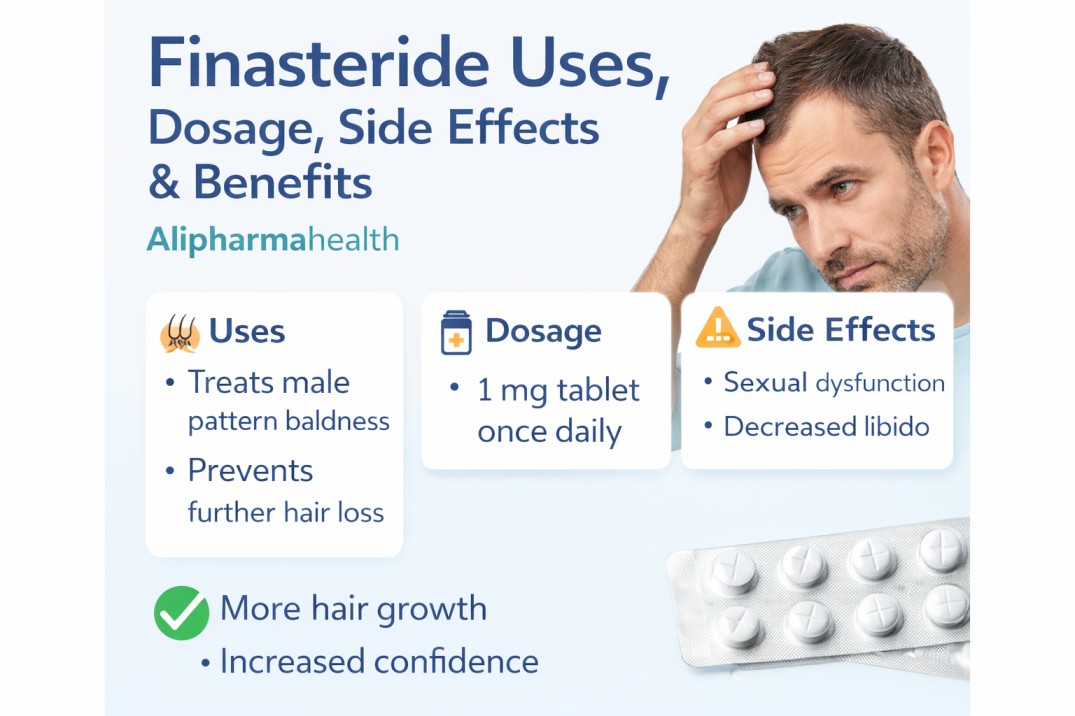
Finasteride is a prescription medication best known for slowing hair loss in men and treating an enlarged prostate (BPH). It works by lowering DHT, a hormone linked to both male pattern baldness and prostate growth. When used consistently and correctly, it can help preserve hair, improve urinary symptoms, and support long-term results.
Why Finasteride Still Gets So Much Attention
Let’s be honest—hair loss and prostate issues aren’t exactly dinner-table topics. But they’re common. Very common. Finasteride has stayed relevant for decades because it targets the root cause instead of just masking symptoms.
This isn’t a quick fix or overnight miracle. It’s more of a “slow and steady” option. And for many men, that’s exactly what works.
If you’ve been noticing thinning hair at the crown, a receding hairline, or frequent bathroom trips at night, Finasteride often enters the conversation sooner or later.
Let’s break it all down—clearly and simply.
What Is Finasteride, Exactly?
Finasteride belongs to a class of drugs called 5-alpha reductase inhibitors. In plain terms, it reduces the conversion of testosterone into DHT (dihydrotestosterone).
Why does that matter?
Because DHT:
Shrinks hair follicles over time
Contributes to prostate enlargement
Lower DHT = less hair loss and a calmer prostate. That’s the core idea.
Ingredients at a Glance
Finasteride products are usually straightforward in composition.
Active ingredient:
Finasteride (commonly 1 mg or 5 mg)
Inactive ingredients may include:
Lactose monohydrate
Microcrystalline cellulose
Magnesium stearate
Starch or similar fillers
Exact ingredients can vary by manufacturer, including those supplied through Alipharmahealth.
What Is Finasteride Used For?
Finasteride is FDA-approved for two primary uses:
1. Male Pattern Hair Loss (Androgenetic Alopecia)
At lower doses, Finasteride helps:
Slow hair thinning
Reduce shedding
Maintain existing hair
It works best at the crown and mid-scalp. Hairlines respond differently, so expectations matter.
2. Enlarged Prostate (Benign Prostatic Hyperplasia)
At higher doses, Finasteride may:
Improve urine flow
Reduce frequent urination
Decrease prostate size over time
This can significantly improve daily comfort and sleep quality.
How Finasteride Is Typically Taken
Finasteride is taken orally, once per day, with or without food.
Common dosing guidelines:
Hair loss: usually 1 mg daily
Prostate support: typically 5 mg daily
Consistency matters more than timing. Missing doses here and there won’t ruin progress, but daily use brings the best long-term outcome.
Always follow medical advice when starting or adjusting dosage.
When Will You See Results?
This is where patience comes in.
Hair shedding may continue for the first few months
Visible improvement often appears after 3–6 months
Full benefits may take 12 months or longer
Stopping Finasteride usually reverses progress within months, so ongoing use is key.
Possible Side Effects (Let’s Be Real About It)
Most users tolerate Finasteride well. Still, side effects can happen.
Reported side effects include:
Reduced libido
Erectile changes
Decreased semen volume
Mild breast tenderness
Mood changes (rare)
For most men, side effects are mild and reversible after stopping the medication.
Important Warnings to Know
Not for women, especially during pregnancy
Tablets should not be crushed or handled by pregnant women
Inform your doctor if you have liver conditions
PSA levels may be affected—important for prostate screening
Finasteride is not a steroid and does not build muscle or boost testosterone.
Who Should Consider Finasteride?
Finasteride may be suitable if:
You’re in early to moderate stages of hair loss
You want to slow progression, not regrow everything
You have BPH symptoms affecting daily life
It’s less effective for advanced baldness where follicles are already inactive.
Frequently Asked Questions (FAQs)
Q1: Does Finasteride regrow hair or just stop hair loss?
Finasteride mainly slows or stops further loss. Some users notice mild regrowth, but preservation is the primary benefit.
Q2: How long can I take Finasteride safely?
Many men use Finasteride for years under medical supervision without issues.
Q3: Will hair loss return if I stop Finasteride?
Yes. Any hair maintained with Finasteride is usually lost again within a few months after stopping.
Q4: Can Finasteride affect fertility?
In rare cases, it may slightly affect sperm parameters, but effects are usually reversible after discontinuation.
Q5: Is Finasteride safe for daily use?
When taken as prescribed, daily use is generally considered safe for most men.
Final Summary
Finasteride remains one of the most researched and reliable options for managing male pattern hair loss and enlarged prostate symptoms. It doesn’t promise overnight change, but it offers something better—control, stability, and long-term results.
If used consistently and responsibly, Finasteride can be a solid part of a long-term health or hair-care plan. Products available through Alipharmahealth follow standard pharmaceutical guidelines, making them a trusted option for those seeking dependable treatment.
Slow progress. Real results. And fewer surprises along the way.
8 Comment(s)
This was exactly the kind of content I was looking for today. I can put the useful advice you gave to use immediately. I'd love to see more posts like this in the future.
I've been feeling a little stuck on this matter, and your post provided me with the clarification I needed. I've already bookmarked this page so I can refer back to it later. Additionally, I appreciated how you acknowledged the difficulties without making them appear insurmountable. I sincerely appreciate you putting this together; it really helped me.
Overall, very well written. I appreciated how the article covered several significant facets of the subject while maintaining focus. The explanations and examples complemented each other well and made the material seem understandable.
Thank you for sharing such valuable thoughts and sparking a thoughtful discussion. I value the effort you put into producing this content, and the points you've made are clear and well-written. What a fantastic read! Your ability to articulate these concepts so clearly is truly impressive.
I really value the effort you put into structuring this post because it flows perfectly from one point to the next. Thanks for taking the time to share this with the community. This type of post encourages meaningful conversation.
What's up to all, it's truly a nice for me to pay a quick visit this web site, it includes important Information.
Without a doubt, this is one of the best articles I've ever read about this subject. Even a beginner could easily follow along with your writing because it is so clear and succinct. I appreciate you putting this together!
That was an angle I hadn't thought of before reading this. You brought up some important issues that go against the conventional wisdom on this topic. It's clear you put a lot of thought into this.
Leave a Comment