

 English
 Arabic
 Chinese (Simplified)
 French
 German
 Japanese
 Korean
 Russian
 Spanish
 Swedish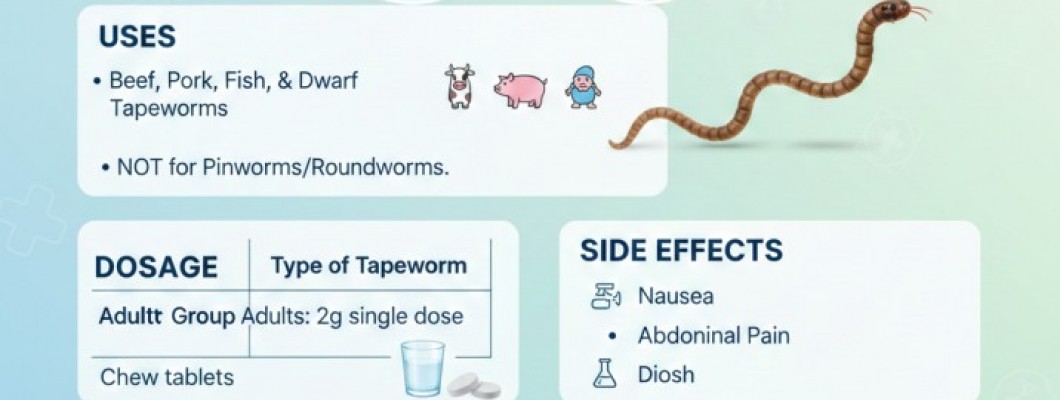
Niclosamide is an antiparasitic medication mainly used to treat intestinal tapeworm infections. It works by killing the parasite in the gut without being significantly absorbed into the bloodstream, making it effective and generally well-tolerated when used correctly.
Why Niclosamide Still Matters Today
Tapeworm infections may sound old-school, but they’re very real—especially in areas with limited sanitation or undercooked meat. That’s where Niclosamide quietly does its job. It’s been around for decades, trusted by doctors, and still recommended in specific parasitic infections.
What makes Niclosamide interesting is how targeted it is. It stays mostly in the intestines, focuses on the parasite, and then exits the body. Simple, direct, and efficient. That’s exactly what you want in an antiparasitic drug.
What Is Niclosamide?
Niclosamide is an anthelmintic medication, meaning it’s designed to eliminate parasitic worms. Unlike many systemic drugs, Niclosamide acts locally in the gastrointestinal tract, which limits widespread side effects.
It’s listed by the World Health Organization (WHO) as an essential medicine, which says a lot about its safety and usefulness when used properly.
Ingredients & Composition
The active ingredient is:
Inactive ingredients may vary depending on the manufacturer but typically include standard pharmaceutical excipients used to stabilize the tablet or suspension. These do not affect the drug’s antiparasitic action.
What Is Niclosamide Used For?
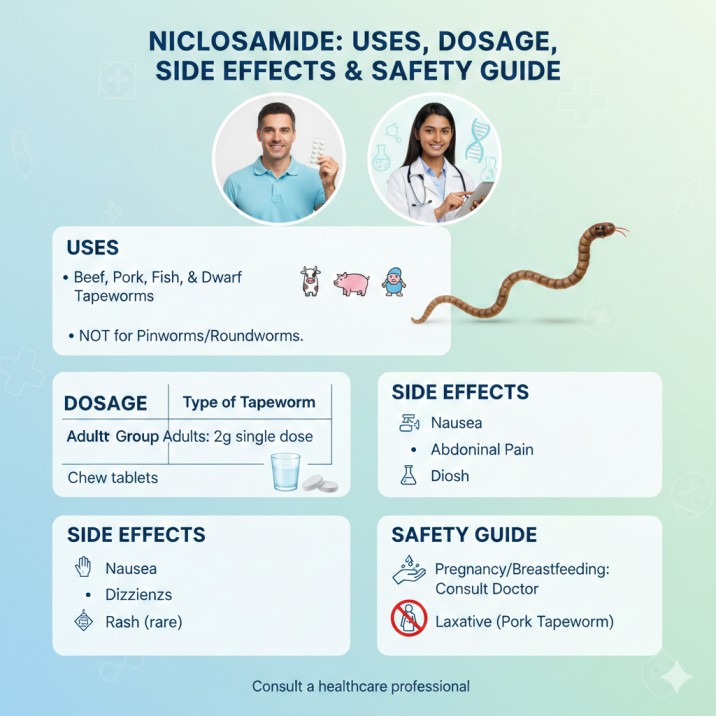
Niclosamide is primarily prescribed to treat tapeworm infections, including:
Beef tapeworm (Taenia saginata)
Pork tapeworm (Taenia solium)
Fish tapeworm (Diphyllobothrium latum)
It works by blocking the parasite’s energy production, causing the worm to die and be expelled from the body through normal bowel movements.
Important note from Alipharmahealth: Niclosamide does not treat infections outside the intestines and should only be used when a tapeworm infection is confirmed or strongly suspected.
How Niclosamide Works in the Body
Niclosamide disrupts oxidative phosphorylation in the parasite. In simpler terms, it starves the worm of energy. Once that happens, the parasite loses its grip on the intestinal wall and is eliminated naturally.
Because very little of the drug enters the bloodstream, its action stays localized—one of the reasons it has a long history of safe use.
Recommended Dosage Guidelines
Dosage depends on age, body weight, and the type of tapeworm being treated.
General guidance:
Adults typically receive a single-day dose, sometimes followed by a mild laxative
Children may receive adjusted doses based on age and weight
Niclosamide tablets are often chewed thoroughly or crushed before swallowing to improve effectiveness.
Possible Side Effects
Most people tolerate Niclosamide well, but mild side effects can occur, including:
Nausea
Abdominal discomfort
Diarrhea
Vomiting
Dizziness (rare)
These effects are usually short-lived and resolve without treatment. Serious side effects are uncommon when taken as directed.
Warnings & Precautions
Before using Niclosamide, keep these points in mind:
Not recommended during pregnancy unless clearly needed
Use with caution in young children
Avoid alcohol during treatment
Proper hygiene is essential to prevent reinfection
Pork tapeworm infections may require additional evaluation due to cysticercosis risk
According to Alipharmahealth, stool examination after treatment is often advised to confirm complete parasite removal.
Drug Interactions to Be Aware Of
Niclosamide has minimal known drug interactions due to its limited absorption. However, always inform your healthcare provider about:
Other antiparasitic medications
Laxatives
Chronic medications
This helps avoid unnecessary complications.
Storage & Handling Tips
Store at room temperature
Keep away from moisture and direct sunlight
Keep out of reach of children
Simple storage, no special handling required.
Frequently Asked Questions (FAQs)
1. How fast does Niclosamide work?
Niclosamide starts working within hours. The parasite is usually expelled within 24 hours after treatment.
2. Is Niclosamide safe for children?
Yes, when prescribed by a doctor and dosed correctly based on age and weight.
3. Do I need a laxative with Niclosamide?
Sometimes, yes. A mild laxative may be recommended to help remove dead parasite segments.
4. Can Niclosamide be used more than once?
Yes, but only if reinfection occurs or if the first treatment wasn’t fully effective.
5. Does Niclosamide kill parasite eggs?
No. It kills the adult worm, which is why hygiene and follow-up testing are important.
Final Summary
Niclosamide remains a trusted, effective, and targeted treatment for intestinal tapeworm infections. Its localized action, long safety record, and straightforward dosing make it a reliable option when used correctly.
At Alipharmahealth, we emphasize responsible use, proper diagnosis, and follow-up care. When those boxes are checked, Niclosamide does exactly what it’s supposed to—quietly, efficiently, and safely.
23 Comment(s)
What a great read! I really appreciated how you backed up your arguments with examples from real life. It greatly increases the relatability and ease of application of the material in daily life. I'm looking forward to your next post.
This post was incredibly perceptive and provided a novel viewpoint on the subject. Thank you for putting this together-it genuinely made a difference for me. It undoubtedly offered me some fresh perspectives.
This is hands down one of the best articles I've read on this topic. I look forward to reading more of your work in the future.
Howdy I am so grateful I found your blog page, I really found you by accident, while I was looking on Askjeeve for something else, Anyhow I am here now and would just like to say thanks a lot for a fantastic post and a all round enjoyable blog (I also love the theme/design), I don't have time to browse it all at the minute but I have saved it and also included your RSS feeds, so when I have time I will be back to read more, Please do keep up the excellent work.
Your writing is captivating without being overpowering, which is a difficult balance to achieve. This article taught me a few new things that I had not previously thought of. Additionally, the post's structure made it simple to follow from beginning to end. Will definitely be recommending this to everyone I know.
References:
$1 payid pokies http://bbs.sdhuifa.com
References:
Online pokies that accept payid https://git.cemarose.cn
References:
Casino Zahlung Sofortüberweisung http://wargame-workshop.com/bbs/home.php?mod=space&uid=1452001
References:
Deutsche Sofort Casinos sg588.tw
References:
Sichere sofort casinos bbs.darkml.net
I hadn't previously thought about some of the intriguing questions this post brought up. I continued to think about it long after I had finished reading. Tell me more about how you came up with these concepts.
References:
Neosurf casino promotions australia https://hackmd.okfn.de
References:
International casinos accepting neosurf australia https://atavi.com/share/y3m457zid86c
References:
Best australian neosurf casinos best online pokies australia neosurf
References:
Neosurf 20 deposit casino $10 deposit bonus casino neosurf australia
References:
Neosurf casino poker machines australia australian online pokies neosurf
References:
Regulated wire transfer casino Australia gaiaathome.eu
References:
Instant withdrawal pokies bank transfer australia http://halcom.cn/home.php?mod=space&uid=155541
References:
Wire transfer casino fees australia md.coredump.ch
References:
Osko pokies free transactions Osko pay pokies
References:
Wire transfer pokies australia https://bbs.kxwh.cn/home.php?mod=space&uid=427988
References:
Pokies Osko payment Osko pokies review
References:
No deposit bonus wire transfer casino australia https://topsitenet.com/
Leave a Comment